The success of an exhibition hall is determined the moment visitors step through the door.Is it a huge high-definition LED display delivering stunning visual impact, or a dim projection screen? The gap between the two lies not only in technical parameters, but the overall exhibition experience.Vican has focused on exhibition hall LED displays for more than 20 years, serving over 3,000 exhibition projects including corporate exhibition halls, planning museums, museums, science and technology museums and cultural tourism scenic spots. We have sorted out a complete design logic for exhibition hall LED displays from entrance to exhibits.
I. Four Core Zones of Exhibition Hall LED Displays
Exhibition hall LED displays do not work as individual screens, but realize system coordination across multiple scenarios. A complete LED display solution for exhibition halls generally includes four functional zones:
Zone 1: Entrance Feature Large Screen
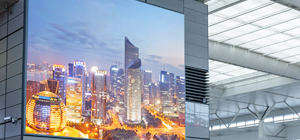
It creates visitors’ first impression of the exhibition hall, usually placed directly opposite the entrance or at the atrium core, undertaking brand presentation and visual shock.
- Screen Size: Generally 6–20 ㎡, determined by floor height and viewing distance
- Pixel Pitch: P1.86–P2.5 (Clear enough for viewing distance of 3–10 meters)
- Brightness: 1000–1500cd/m² (Indoor lighting in exhibition halls is controllable; ultra-high brightness is unnecessary)
- Content: Corporate promotional videos, brand stories, core product displayDesign Notes: Adopt ultra-narrow screen borders to visually integrate the display with architecture. Match with audio systems to build an integrated audio-optical-electronic experience.
Zone 2: Themed Exhibit LED Displays
Independent LED displays for each themed exhibition area to present specific content such as product history, technical principles and case data.
- Screen Form: Flat LED screen, curved LED screen, special-shaped LED screen (customized based on space design)
- Pixel Pitch: P1.25–P1.86 (High definition requirement for close viewing)
- Interactive Demand: Some exhibits support touch/induction linkage; LED displays need docking with central control system
- Content: Video-based display of exhibition board content, data visualization and animation demonstration
Zone 3: Immersive Space LED Displays
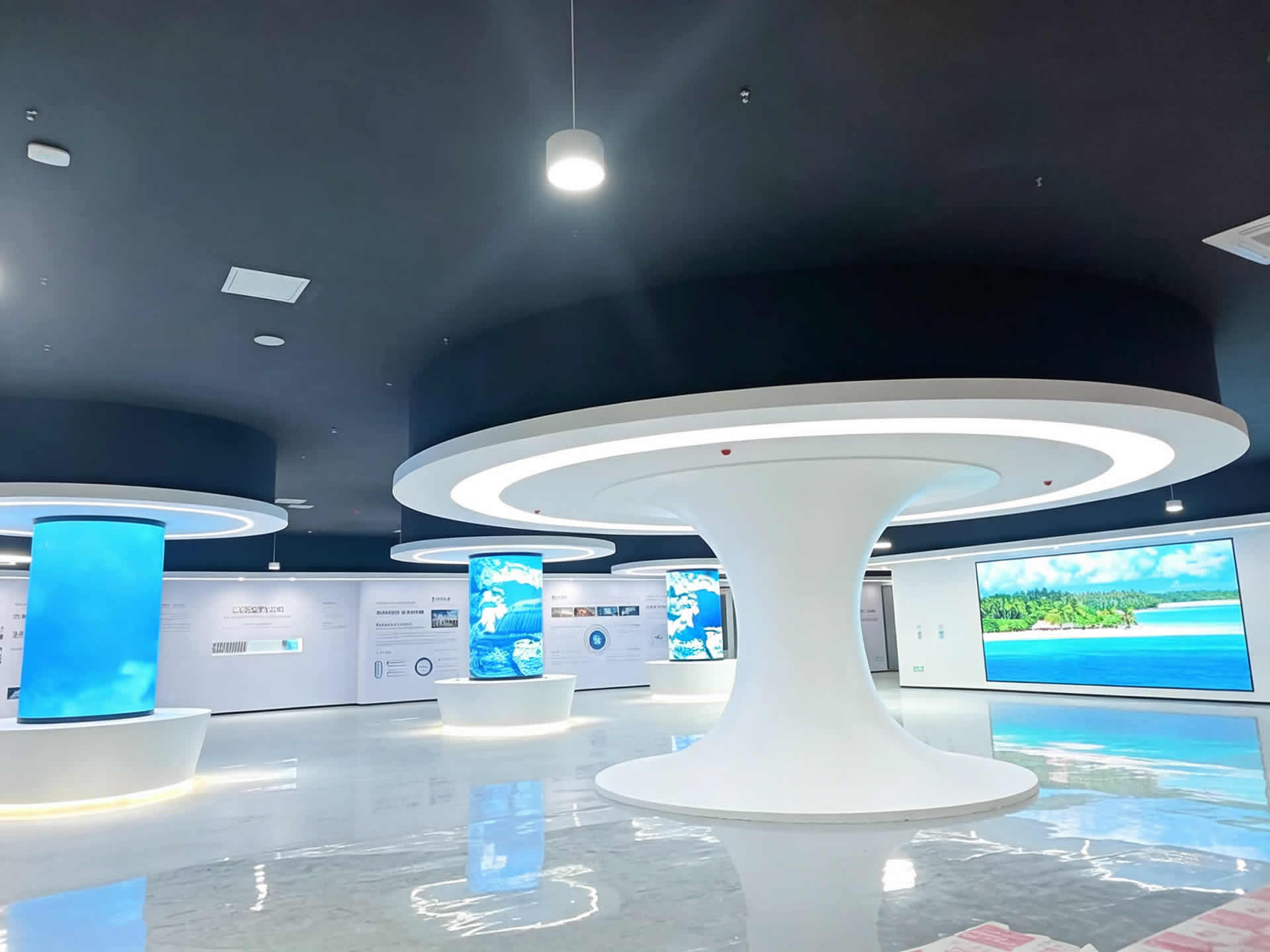
Usually the highlight area in corporate pavilions, science museums and cultural tourism scenic spots. Surrounding LED screens form an immersive visual space.
- Screen Form: L-shaped corner screen, three-sided screen, five-sided cabinet, curved bowl screen, spherical screen
- Pixel Pitch: P1.53–P2 (Delicate images for close visitor viewing)
- Refresh Rate: ≥3840Hz (Avoid scan lines when working with projectors or cameras)
- Content: Immersive films, interactive games and virtual roaming experience
Zone 4: Corridor Guide LED Displays
Small LED screens in corridors and passages for content guidance and traffic navigation.
- Screen Size: Generally 1–3 ㎡
- Pixel Pitch: P2–P2.5 (Close viewing distance with simple content)
- Content: Exhibition area names, direction guidance and floor navigation
II. Key Parameters for Exhibition Hall LED Display Selection
LED display selection for exhibition halls differs essentially from meeting rooms and command centers. Exhibition hall environments have several special requirements:
Requirement 1: Priority on Appearance Design
The LED display is part of spatial design, not just functional equipment as in command centers.
- Ultra-thin Cabinet: Thickness controlled within 80mm to reduce visual bulk
- Seamless Splicing: Module gap <0.5mm for integrated image without segmentation
- Custom Shapes: Curved, circular and L-shaped screens customized to architectural space
- Silent Design: Fanless cooling system to fit quiet exhibition environments
Requirement 2: Color Consistency
Multiple LED displays often work together in one exhibition hall, making color consistency critical.
- Unified Color Temperature: Color temperature deviation of all screens <200K
- Brightness Uniformity: Overall screen brightness uniformity >95%
- Point-by-Point Calibration: Calibrate brightness and color temperature after installation to eliminate chromatic aberration
Requirement 3: Linkage with Central Control System
Modern exhibition halls adopt centralized control systems (iPad, mobile phone or wall touch panels). LED displays must support central control access.
- Network Control: TCP/IP protocol for remote power on/off and content switching
- Scene Presets: Multiple content scenes preset for one-click switching
- Signal Switching: Fast switching of multi-signal sources including PCs, video servers and network streams
III. Design Process of Exhibition Hall LED Display Solutions
A complete LED display solution design includes 4 steps:
Step 1: Demand Sorting
- Exhibition Hall Positioning: Corporate exhibition hall / planning museum / museum / cultural tourism scenic spot?
- Quantity and Area of Exhibition Zones: Number of zones and total area
- Content Demand: Video playback, data display or interactive experience?
- Budget Range: High-end / Mid-range / Economy?
Step 2: On-site Survey
- Spatial Dimensions: Accurate measurement of floor height, width and depth
- Viewing Distance: Maximum & minimum viewing distance to decide pixel pitch
- Ambient Light: Natural lighting area and lighting design to confirm brightness requirement
- Structural Conditions: Wall load-bearing, power supply capacity and network wiring
Step 3: Solution Design
- Screen Selection: Confirm pixel pitch and size according to zone functions and viewing distance
- Steel Structure Design: Wall mounting on load-bearing walls, ground support or hoisting
- Power & Network Layout: UPS uninterruptible power supply and gigabit network layout
- Content Planning: Cooperate with digital content production teams to arrange playback materials
Step 4: Installation & Commissioning
- Screen Installation: Cabinet assembly, cable connection and precision splicing
- Point-by-Point Calibration: Adjust brightness and color temperature pixel by pixel for uniform images
- System Joint Debugging: Test linkage with central control system and content server
- Handover Training: Train operators to guarantee smooth daily operation
IV. Common Types of Exhibition Hall LED Display Solutions
Three mainstream solution combinations for selection based on project needs:
Solution 1: Compact Type (Small Corporate Exhibition Hall, 100–300 ㎡)
- Entrance Large Screen: 1 set P2.5 indoor full-color LED display, 3.84m×2.16m (153 inch)
- Exhibition Area Screens: 2–3 sets P2 LED screens for wall mounting
- Budget: Medium investment, suitable for SMEs’ brand display
Solution 2: Standard Type (Medium & Large Corporate Exhibition Hall, 300–800 ㎡)
- Entrance Large Screen: 1 set P2 LED display, 5m×2.8m (200 inch)
- Themed Exhibit Screens: 4–6 sets P1.86 LED displays distributed in each zone
- Immersive Space: 1 set L-shaped or three-sided screen combination with P1.53 pixel pitch
- Budget: Relatively high investment, suitable for medium enterprises and institutional exhibition halls
Solution 3: Flagship Type (Large Planning Museum / Museum / Cultural Tourism Scenic Spot, 800㎡+)
- Entrance Large Screen: 1 set P1.86 LED display, 8m×4.5m (320 inch) or larger
- Immersive Space: Curved bowl screen, spherical screen or five-sided cabinet with P1.25–P1.53 pixel pitch
- Multi-screen Linkage: Over 10 LED displays managed uniformly by central control
- Budget: High-end investment, suitable for government exhibition halls and large cultural tourism projects
V. Vican Exhibition Hall LED Display Cases
Case 1: Enterprise Exhibition Hall of A Leading Tech Company
- Configuration: Entrance P1.86 curved LED display (8m×3m), 6 sets P1.53 LED screens in exhibition zones, 1 set L-shaped immersive space
- Features: All screens connected to central control system; one-click scene switching via iPad
- Outcome: Rated as the Group’s Best Exhibition Hall of the Year, receiving visits from government officials and clients
Case 2: Provincial Planning Exhibition Hall
- Configuration: Entrance P2 LED display (6m×3.4m), curved screen projection fusion + P1.53 LED floor tile screen and multiple themed exhibition LED displays
- Features: COB fine-pitch LED screens for high-precision data visualization, matched with touch query system
- Outcome: Receive over 20 visiting groups per day, zero failure after 3 years of operation
Vican has specialized in exhibition hall LED display solution design for over 20 years with more than 3,000 completed exhibition projects. We provide one-stop full-service including solution design, equipment selection, steel structure construction, content coordination and 7×24-hour after-sales support.
If you have procurement demands for exhibition hall LED displays, welcome to contact us. Vican offers free solution design and on-site survey. As a manufacturer with 20+ years experience, we guarantee reliable quality.